How to trade bitcoin into a decisive weekly close without guessing the next move
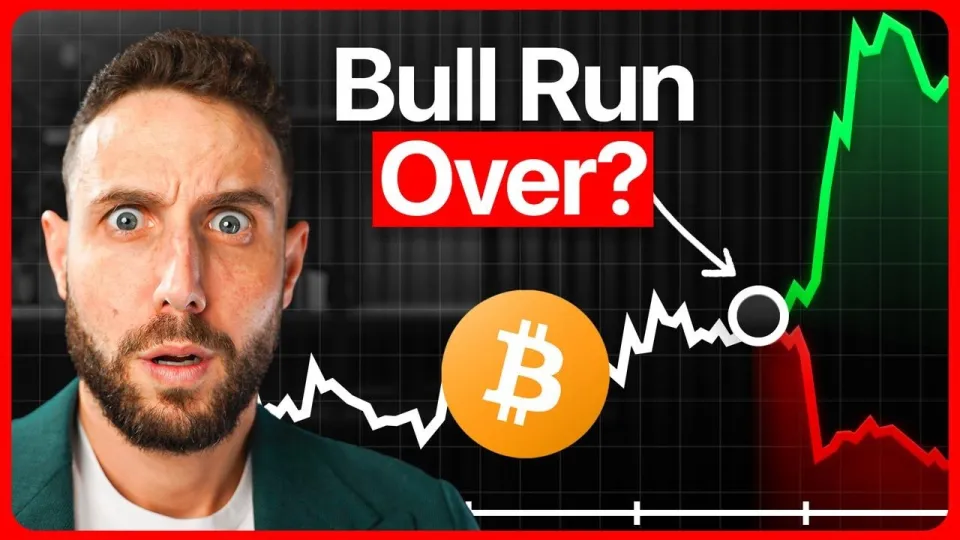
Video: Bitcoin Has 2 DAYS to Save the Crypto Bull Run
Want articles like this for your own video to promote it on YouTube and Google? Order them through the Telegram bot @sat_sit_bot. Articles with your video embedded are written and posted by the bot itself — on popular topical sites (no ads). Your first 50 articles are free.
· based on the channel EllioTrades
Key takeaways
- The weekly candle close is the single trigger that decides whether the crypto bull run stays intact or breaks down.
- A weekly close below major support flips the plan from buying dips to protecting capital and waiting.
- Holding support keeps the higher-timeframe uptrend valid and opens rotation into large-cap altcoins.
- Position sizing matters more than the entry: risk a fixed small percentage of the account per trade.
- Bitcoin dominance is the rotation gauge: rising dominance means altcoins keep bleeding even if BTC holds.
Bitcoin traders should treat the coming weekly candle close as the decision point: if BTC holds its major higher-timeframe support on a weekly basis, the bull structure stays valid and dips remain buyable; if the weekly close breaks below it, the plan flips to capital preservation and no new altcoin exposure. Everything else — altcoin rotation, leverage, entries — follows from that single condition. Anyone who wants to hedge or express a view on the outcome can do it through Kalshi's event markets, where the payoff is defined before the trade is placed.
Why the bitcoin weekly close matters more than any daily candle
A weekly close is the only price print that reflects a full week of spot, futures and ETF flows, so it filters out the weekend wicks and thin-liquidity fakeouts that dominate daily charts. That is why a single weekly candle can decide whether the crypto bull run continues or whether the market shifts into a corrective regime.
Practical rules for reading that candle:
- Wait for the close itself, not the intrabar price. A wick below support that closes back above it is a liquidity sweep, not a breakdown.
- Compare the close with the prior week's range. A close in the lower third of the range after a rejection signals supply; a close near the highs signals continuation.
- Check volume and derivatives funding alongside price. A breakdown on falling open interest is weaker than one on rising volume with negative funding.
- Mark the level once and do not move it afterwards. Traders who redraw support every day never get a real invalidation signal.
If the weekly close holds, the base case is continuation and dips toward support are accumulation zones. If it fails, the base case becomes a deeper retrace and the correct action is to reduce exposure rather than average down aggressively.
The levels and conditions that define the trade
Support and resistance only matter when they are tied to an action, so each level in a bitcoin plan should have a pre-written response attached to it.
- Support holds on the weekly: the uptrend is intact, spot accumulation is justified, and altcoins with strong relative strength can be added.
- Support breaks on the weekly: cut leverage, take risk off the table, and wait for a reclaim before re-entering.
- Reclaim of the broken level: the failed breakdown becomes a bullish signal, but only after a daily close back above it.
- Range compression: when price chops between two levels, the correct trade is often no trade at all until the range resolves.
Position sizing deserves the same attention as the level. Risking a fixed 1–2% of the account per idea means a wrong call on the weekly close costs a small, survivable amount, while a correct call compounds. Leverage amplifies both outcomes and is the main reason retail traders get stopped out of a thesis that was actually right.
How altcoins behave if bitcoin holds support
Altcoin performance is conditional on bitcoin stability, not independent of it. When BTC holds its weekly support, capital rotates down the risk curve into large caps first and small caps later; when BTC loses support, correlations go to one and altcoins fall faster than bitcoin.
A simple rotation checklist:
- Confirm BTC is above its weekly support before adding altcoin exposure.
- Watch bitcoin dominance: rising dominance during a BTC bounce means altcoins are still bleeding.
- Favour assets with higher-high and higher-low structures against BTC, not just against the dollar.
- Size altcoin positions smaller than the BTC position, because their drawdowns are deeper.
- Avoid shorting a strong altcoin simply because it has already run — relative strength tends to persist in a healthy market.
Typical trader doubts and how to answer them
Sentiment flips faster than price. One red week is enough to turn a crowd that was euphoric into one that expects a multi-year bear market, and that swing is itself information about positioning rather than about fundamentals.
Common doubts and the disciplined response:
- "Should I wait for a much cheaper entry?" Waiting for a major setback is only rational if the invalidation level is respected. If support holds, the market simply does not offer that discount, and demanding it means missing the move.
- "Isn't a short bear market a bad sign for the next bull?" Deep, long bear markets reset valuations; shallow corrections keep leverage elevated. Both outcomes are tradable, but they require different holding periods.
- "Can retail save bitcoin over a weekend?" Weekend liquidity is thin and market makers are less active, which is exactly why the weekly close, not the weekend print, is the signal.
- "What counts as a buying opportunity?" Define it in advance: a specific level, a specific close, a specific position size. Without that definition, every dip looks either too early or too late.
Risk management rules that survive a wrong call
Survival is the edge. A trader who is right 50% of the time but never risks more than a small fixed amount per idea stays in the game long enough for the winning trades to matter.
- Predefine the invalidation level before entering, and accept the loss when it is hit.
- Avoid adding to a losing position unless the original thesis explicitly included scaling in.
- Keep a cash buffer so a deep retrace is an opportunity rather than a forced exit.
- Track the plan in writing; a public trading journal makes emotional decisions visible.
- Treat macro and index-level events as scheduled volatility and reduce size around them.
Tools and links for executing the plan
- Kalshi event markets: trade defined-outcome contracts on market events, with a signup offer for new users.
- Liquid: derivatives trading with a 10% discount on trading fees through the referral link.
- WEEX bonus programme: deposit $100 and unlock up to $4,000 in bonuses.
- fomo: a public trading journal for tracking positions and performance.
- EllioTrades on X: chart updates and level changes between videos.
Summary
Bitcoin's weekly close is the trigger, not the noise around it: hold support and the bull structure stays intact with dips as accumulation zones; lose it and the correct response is smaller size and patience. Levels should be written down with an action attached, altcoin exposure should be conditional on BTC stability and dominance, and risk per trade should be small enough that a wrong call never ends the account. EllioTrades lays out this kind of level-by-level plan in the video breakdown, and the same framework can be executed with defined-risk instruments on Kalshi if you prefer a fixed payoff to an open-ended position.
Questions & answers
Does a single weekly close really change the bitcoin trend?
It changes the probabilities, not the entire trend in one print. A weekly close below major support shifts the base case from continuation to correction and justifies reducing exposure, while a close back above the level turns the failed breakdown into a bullish signal. Treat it as a switch in the plan, not a prophecy.
Should I buy altcoins before bitcoin confirms its weekly close?
No. Altcoin exposure is conditional on bitcoin holding higher-timeframe support, because correlations rise and altcoins fall harder when BTC breaks down. Wait for the close, then rotate into assets showing relative strength against BTC rather than against the dollar alone.
Is it better to wait for a deep crash to buy cheaper?
Only if your invalidation level is respected. If support holds, the market may simply not offer that discount, and waiting means missing the move. Define the entry level, the close that confirms it and the position size in advance so the decision is mechanical.
How much should I risk on a bitcoin trade around this decision point?
A common approach is a fixed 1–2% of the account per idea, with the stop placed at the level that invalidates the thesis. That keeps a wrong call survivable and lets a correct one compound, which matters more than the entry price itself.
Source: Bitcoin Has 2 DAYS to Save the Crypto Bull Run · Markdown version